
How to Edit a Wikipedia Page (And Make Sure It Stays)
May 6, 2026
Reputation Management SEO: The Strategy No One Talks About
May 13, 2026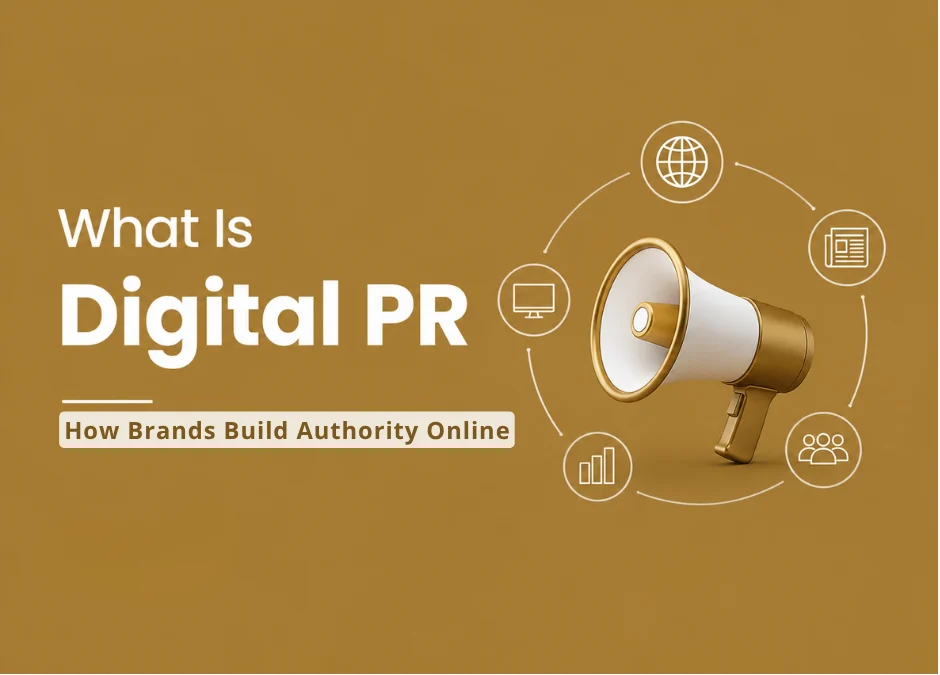
Most people find out what digital PR is right after they needed it.
A negative article sits at the top of their search results. A competitor’s press release is outranking their own website. An old controversy resurfaces because there’s nothing strong enough online to push it down. By the time they’re searching for answers, the problem is already expensive.
Digital PR is what prevents that. It’s the work you do before the crisis, the quiet construction of a positive digital footprint that becomes your most valuable asset when your reputation is on the line.
This guide explains what digital PR actually is, how it works, and why reputation protection is one of its most important functions.
What Is Digital PR?
Digital PR is the practice of earning coverage, mentions, backlinks, and brand visibility across online platforms to build authority, shape public perception, and strengthen a brand’s presence in search.
It combines traditional public relations tactics with search engine optimization, content marketing, and digital outreach. The goal is to get your brand mentioned, cited, and linked to by credible online sources.
That includes news sites, industry publications, podcasts, YouTube channels, review platforms, blogs, and anywhere else an audience is paying attention.
Unlike traditional PR, where success was measured in print column inches and broadcast minutes, digital PR leaves a traceable, permanent record. Every article published, every backlink earned, every brand mention indexed by Google builds something that compounds over time.
Digital PR vs. Traditional PR
The comparison gets made constantly, and it matters less than most people think. They serve different functions.
Traditional PR focused on relationships with journalists and editors, pitching stories to newspapers, magazines, and TV producers. The coverage was valuable but ephemeral. Once the newspaper cycle ended, the story disappeared. You couldn’t easily measure whether it drove awareness or sales.
Digital PR works differently. An article published about your brand in 2023 still ranks in search results in 2026. A backlink from a high-authority publication passes ranking power to your website indefinitely. A podcast appearance gets indexed, transcribed, and cited by AI models that are now answering questions about your industry.
What is the difference between digital PR and traditional PR?
Traditional PR targets offline media and relies on relationships with journalists to earn coverage that is often short-lived. Digital PR earns coverage, links, and mentions across online platforms that remain indexed, searchable, and influential in both search rankings and AI-generated responses for years.
There is also an audience access difference. Traditional PR reached people through gatekeepers: editors decided what the public saw. Digital PR reaches people directly through search, social sharing, and content consumption. You can build authority without a single newspaper placement, though that kind of coverage helps too.
The Core Components of Digital PR
Digital PR is not one tactic. It’s a collection of activities that, done together, build a dominant and positive presence online.
Earned media coverage. Getting your brand, founders, or experts featured in news publications, trade outlets, and online magazines. These placements are editorial, meaning a journalist or editor chose to include you. That choice carries credibility that paid advertising cannot replicate.
Link acquisition. When those editorial placements link back to your website, your site gains authority in Google’s eyes. Links from high-Domain Rating (DR) publications like Forbes, Inc., or industry-specific outlets are reputation votes. They tell search engines that credible sources vouch for you.
Brand mentions and citations. Not every mention includes a link, but they still matter. AI models are increasingly citing sources in their answers — if your brand appears in the content they reference, you gain visibility in AI-generated responses. That surface area matters more every year.
Press releases and announcements. Distributing news about product launches, partnerships, research findings, or milestones to digital newswires and publications. Done well, press releases generate pickup from journalists who then write their own stories with links.
Data and research campaigns. Original research gives journalists a reason to write about you and link to you. A study you publish becomes a citable source. That single piece of content can earn dozens of backlinks from outlets reporting your findings.
Expert positioning. Getting your spokespeople quoted as industry authorities in relevant articles. Each quote is a brand mention. A pattern of expert quotes builds a public perception of your brand as a trusted voice in your space.
Influencer and creator partnerships. Working with relevant creators whose audiences overlap with yours. This differs from traditional influencer marketing in that the focus is on credibility and audience fit rather than follower count.
Each of these activities creates an online asset. Combine them, and you build something that looks a lot like reputation infrastructure.
How Digital PR Protects Your Reputation
Here’s what most digital PR articles miss: all of that activity described above is also your best defense against reputation damage.
This is the part worth understanding clearly.
It Fills Search Results Before Someone Else Does
When someone searches your brand name, the first page of results tells your story. If that page contains nothing except your website and a couple of weak social profiles, you have almost no control over what fills the remaining positions. A negative article, a disgruntled customer review, a hit piece from a competitor — these can rank for branded searches and stay there.
Digital PR fills that page. Press coverage, podcast appearances, industry features, Wikipedia citations, YouTube interviews — these all compete for those search positions. The more high-quality content exists about you online, the less room there is for damaging content to surface and hold ground.
That’s not an accident. It’s a deliberate strategy. And it works.
It Builds Trust Signals Before They’re Needed
People researching your brand ask one question first: are you legitimate? They look for third-party validation. Social proof. Signs that someone other than you says you’re credible.
A company with fifty backlinks from recognizable publications, recurring expert quotes in industry press, and a pattern of earned media coverage looks legitimate. A company with a website, two LinkedIn posts, and a Google Business profile with twelve reviews does not.
That trust infrastructure, built through digital PR, is what separates a brand that survives a reputation hit from one that gets defined by it. When negative content appears, people who already have context about your brand weigh it against everything else they’ve seen. When no context exists, the negative content becomes the whole story.
It Gives You Narrative Control
Reputation crises almost always start with a narrative vacuum. Something goes wrong, and because your brand hasn’t been actively communicating its story, someone else fills that vacuum with their version.
Digital PR keeps that vacuum from forming. Regular press activity, expert commentary, original content — these put your narrative into circulation continuously. People come to understand what your brand stands for before anything goes sideways.
How does digital PR protect your reputation?
Digital PR creates a volume of positive, authoritative content about your brand that fills search results, builds third-party credibility, and establishes your narrative before problems arise. When a reputation crisis occurs, that foundation makes it far harder for damaging content to dominate search results or define public perception.
It Accelerates Recovery When Things Go Wrong
If your reputation does take a hit, digital PR is how you recover. But there’s a big difference between brands that have existing digital PR foundations and those that don’t.
A brand with fifty existing authoritative backlinks and regular press coverage has leverage. A new piece of positive coverage from a credible outlet can move quickly in search results. Existing brand mentions give Google context for who you are. Journalists who’ve covered you before are more likely to give you a fair hearing.
Starting from scratch during a crisis is vastly harder. You’re trying to build credibility under scrutiny, with no existing track record and no relationships with press. It’s possible, but it takes much longer and costs far more than building the foundation in advance. If you’re already in crisis mode, working with a reputation management firm can help accelerate recovery while you build your digital PR foundation.
Digital PR and SEO: Why They’re Inseparable
Digital PR and SEO are often treated as separate disciplines. They’re not, at least not at the execution level.
Search engines use backlinks as one of their primary ranking signals. When a high-authority publication links to your site, that link passes authority to your domain and to the specific pages it references. More authority means better rankings. Better rankings mean your content appears when people search for your brand, your services, or your category.
For reputation specifically, this matters a lot. The pages that rank highest for your brand name are the pages with the most authoritative links pointing to them. A negative article with strong backlinks will outrank a positive page with none. That’s not a glitch — it’s how search works.
Digital PR earns the links that give your positive content ranking power. Your press release, your bio page, your leadership team page, your core service pages — these all benefit from the links that your PR activities generate. Over time, those links create a ranking moat. Your authorized narrative becomes structurally difficult to displace.
What is the connection between digital PR and SEO?
Backlinks earned through digital PR directly improve your website’s domain authority and the ranking positions of individual pages. Higher-ranking pages are harder for negative content to displace, making digital PR an active mechanism for protecting search visibility and reputation.
The link building aspect is where a lot of brands are still asleep. They run PR for awareness. They run SEO for traffic. Very few deliberately use PR-earned backlinks as a reputation defense tool. That gap is where the opportunity is.
Digital PR Examples That Actually Build Reputation
Tactics without examples stay abstract. Here’s what digital PR actually looks like when it’s working for reputation:
The data study – A cybersecurity company publishes original research on the most common password mistakes. Tech media picks it up, links to the study, and quotes the company’s CEO as an expert. The CEO is now an on-record authority on password security. Fifty publications link to the company’s website.
The expert quote campaign – A wealth management firm identifies ten financial journalists who write weekly explainers. Their advisors respond rapidly to journalist requests for expert commentary. Within six months, their advisors appear regularly in finance coverage. When someone searches the firm’s name, they find a page of credible media mentions.
The award and recognition pitch – A consulting firm applies for industry recognition lists, “best places to work” rankings, and sector-specific awards. Each inclusion generates coverage, backlinks, and brand mentions that associate them with credibility and quality.
The crisis preemption piece – A healthcare company publishes a transparent explainer about how they handle patient data. It ranks for their brand name plus “data privacy.” When a competitor faces a data breach and journalists look at the whole sector, the company’s published position is already on record and easy to find.
None of these are glamorous. All of them work.
How to Build a Digital PR Strategy
A digital PR strategy that actually protects your reputation has a few non-negotiable elements.
Audit what already exists – Before you build, check what ranks for your brand name. What’s the current story? Where are the gaps and vulnerabilities? If a competitor is already publishing content that competes with your branded search terms, you need to know before you start.
Identify your target publications – Not every outlet matters equally. Build a list of the publications, newsletters, and online destinations where your target audience gets their information. Prioritize by domain authority and audience relevance. A link from a lower-authority niche publication in your exact sector is often worth more than a high-authority generalist placement that brings no relevant audience.
Develop a story pipeline – Journalists need reasons to write about you. Product launches, company milestones, and original research are your raw material. Plan six months of potential stories. For each one, consider which publication it fits and which journalist covers that beat.
Build journalist relationships early – The best time to introduce yourself to a journalist is before you need something from them. Follow their work. Send relevant tips that don’t involve your brand. When you have a real story, you’re not a stranger.
Create linkable assets – Content that earns backlinks naturally tends to be: original research, comprehensive guides, tools or calculators, data visualizations, or controversial but defensible arguments. At least one of these should be planned per quarter. Our digital PR services team can help build and execute that pipeline.
Track your share of search – Monitor what ranks for your brand name monthly. As your digital PR activity builds, positive content should progressively occupy more of that first page. That trend line is a direct measure of reputation health.
Digital PR as Reputation Insurance
There is a framing that makes the investment case clearest.
Digital PR is reputation insurance you take out before the fire starts. Like actual insurance, it feels unnecessary until the moment you need it. And like actual insurance, the cost of getting it after you need it is much higher than the cost of maintaining it in advance.
The brands that handle reputation crises well almost always have existing digital PR foundations. They have relationships with journalists. They have a body of positive, authoritative coverage that gives them standing. They have backlinks that make their own content competitive in search.
The brands that get damaged badly are usually the ones that never invested until something went wrong. They’re starting from zero, building under fire, and competing against content that has a head start.
The case for digital PR is not “earn media coverage to get leads.” That’s secondary. The case is simpler: you will face reputation challenges. The question is whether you’re prepared for them when they arrive.
Frequently Asked Questions
Q: What is digital PR in simple terms?
Digital PR is earning positive, credible coverage and mentions for your brand across online platforms including news sites, blogs, podcasts, and social media. The coverage builds authority, improves search visibility, and shapes how people perceive your brand when they look you up.
Q: How is digital PR different from online reputation management?
Online reputation management (ORM) is largely reactive: it addresses existing negative content by suppressing, responding to, or countering it. Digital PR is proactive: it builds a volume of positive, high-authority content before problems arise. Used together, they create a much stronger reputation defense than either does alone.
Q: How long does digital PR take to show results?
Search results shift over months, not days. A solid digital PR campaign typically shows measurable impact on brand search results within three to six months, and significant impact on domain authority and ranking positions within six to twelve months. The timeline depends on the starting baseline, the volume of activity, and the authority of the publications involved.
Q: Do you need a large budget for digital PR?
Not necessarily. Some of the most effective digital PR tactics, including expert commentary placements, data studies built from your own internal insights, and journalist relationship-building, cost more time than money. A focused strategy with limited resources beats an unfocused strategy with a large budget.
Q: What’s the biggest mistake brands make with digital PR?
Waiting too long to start. Most brands only think about digital PR after a reputation problem appears. At that point, they’re building credibility without any existing foundation while simultaneously trying to manage a crisis. Starting early, even modestly, creates compounding advantages that are essentially impossible to replicate quickly under pressure.
Q: Can digital PR help remove negative content from Google?
Digital PR cannot delete third-party content, but it can displace it. By creating a volume of high-quality, backlinked content that ranks for your brand terms, you push negative content lower in search results where far fewer people see it. For persistent negative content removal, combining digital PR with professional suppression services is often more effective than legal attempts alone.