
Top 10 Wikipedia Page Creation Services in the USA (2026 Guide)
September 24, 2025
How 2026 Could Reshape Wikipedia – AI, Traffic, and the Future of Knowledge
December 26, 2025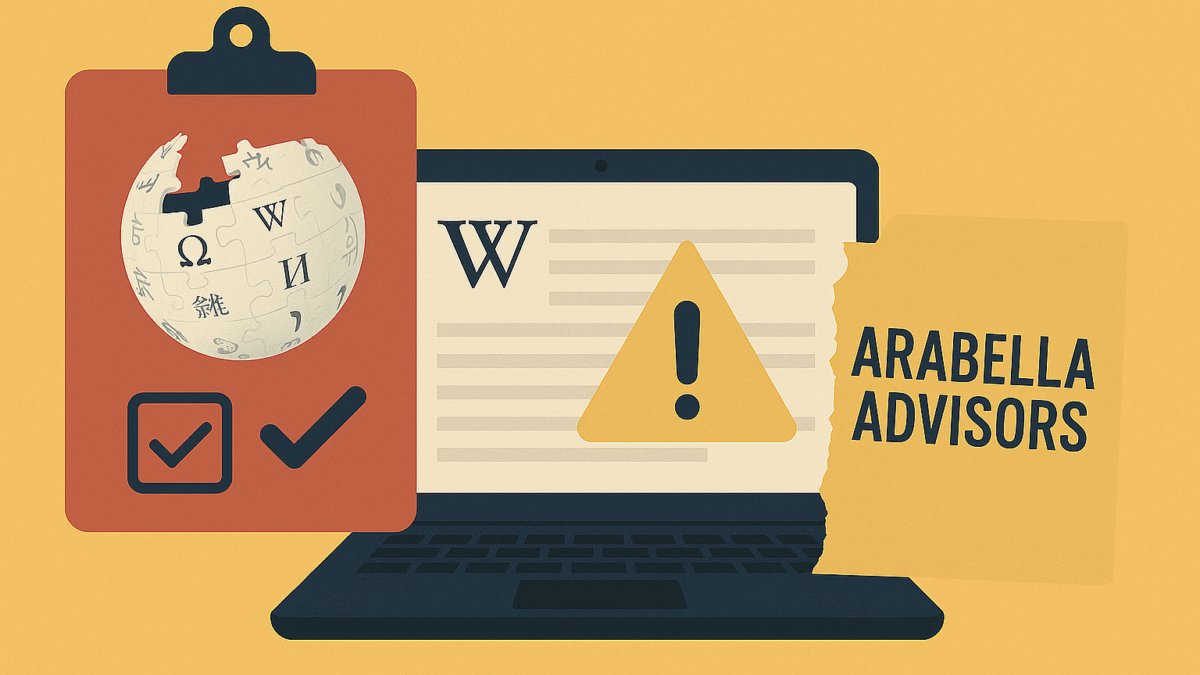
Arabella Advisors tried to fix its Wikipedia page. Twice. Both times, the effort backfired. Instead of cleaning up the article, they made it worse and turned a manageable reputation issue into a permanent, highly visible record of failed manipulation attempts.
This is not just a story about one company’s mistakes. It is a case study in how not to handle Wikipedia, and what happens when organizations treat the platform like a PR channel instead of an encyclopedia.
The 2020 Paid Editing Disaster
In 2020, Arabella Advisors hired a PR contractor named Mary Gaulke to edit their Wikipedia article. The goal was straightforward from the company’s perspective: soften critical language, reframe negative coverage, and remove anything that reflected poorly on the firm.
The execution fell apart immediately. Gaulke did not properly disclose her relationship with Arabella when making edits. She pushed changes that removed critical coverage sourced from outlets like the Washington Free Beacon and InfluenceWatch. Wikipedia editors flagged the edits within days.
Everything got reversed. The connection between Gaulke and Arabella was exposed publicly. The attempt made headlines across the political spectrum. The Daily Beast covered it from the left. The Washington Free Beacon covered it from the right. What was supposed to be a quiet cleanup became national news.
The worst part came next. Wikipedia editors did not just revert the edits. They added a new line directly into the article’s lead section documenting the paid editing attempt itself. The very thing Arabella tried to hide became part of the permanent record, cited with sources, visible to anyone searching the company’s name.
The page got locked down. Editors flagged it for extra scrutiny. And Arabella earned a reputation within the Wikipedia community as a company that tries to manipulate the platform. On Wikipedia, once you lose that trust, getting it back is nearly impossible.
The 2025 Attempt: Transparent Approach, Same Result
Five years later, Arabella tried again. This time, they took what looked like a smarter approach.
Julia Sze, representing the firm, posted on the article’s Talk page. She disclosed her affiliation with Arabella upfront. She submitted a detailed list of proposed changes, arguing that parts of the article relied on low-quality sources, contained potentially AI-generated content, and that the overall structure misrepresented the company’s scope. She quoted Wikipedia policies, linked supporting sources, and followed the formal process.
On paper, she did everything right. In practice, none of it worked.
Editors pushed back on every suggestion. Some responded with detailed rebuttals. Others ignored her posts entirely. Her sources were not considered neutral. Her requests, despite the transparent framing, still read like PR to the Wikipedia community.
Then came the real damage. Editors pointed directly to Arabella’s 2020 incident as justification for keeping the page locked and rejecting the new proposals. The paid editing scandal, which had been a relatively minor detail buried in the article, got resurfaced and moved into greater prominence.
Instead of moving the article forward, Sze’s posts dragged everything backward. She reminded the Wikipedia community exactly why this page gets extra scrutiny. The company walked into the same wall they hit five years earlier, except this time they knew the wall was there.
Why Wikipedia is Not a PR Channel
Arabella’s double failure illustrates a fundamental misunderstanding that many organizations share. Wikipedia does not work like other platforms. You cannot message your way out of a bad article. You cannot negotiate with editors the way you would with a journalist. And you cannot send representatives, whether disclosed or undisclosed, to push changes and expect compliance.
Wikipedia’s editorial community operates on three principles that conflict directly with corporate PR goals.
Neutrality means the article will include criticism alongside positive information. Companies that want a purely flattering page will always be disappointed. Wikipedia articles are supposed to represent the full range of reliable source coverage, including coverage the subject would prefer did not exist.
Verifiability means every claim needs a published, reliable source. Corporate press releases and company websites rarely qualify. The sources that matter are independent media outlets, academic publications, and established news organizations. If the only sources supporting your preferred framing come from your own marketing team, Wikipedia will not accept them.
Conflict of interest policies mean that anyone with a financial or personal connection to the article subject faces automatic skepticism. Even when paid editors disclose their affiliation, as Sze did in 2025, the community treats their suggestions with far more scrutiny than those from independent editors. Disclosure does not equal acceptance.
How Wikipedia Memory Works Against You
One of the most dangerous aspects of Wikipedia for companies that have already made mistakes is the platform’s institutional memory.
Wikipedia does not forget. Every edit, every Talk page discussion, every rejected proposal lives in the article’s permanent history. Editors who watch a page can see everything that has ever happened on it. When a new request comes in, they check the history first.
For Arabella, this meant that Sze’s 2025 proposals were not evaluated on their own merits. They were evaluated in the context of the 2020 paid editing scandal. Every suggestion she made carried the weight of the company’s previous manipulation attempt.
This is how Wikipedia’s trust system works. Companies that play by the rules from the start build credibility over time. Companies that violate trust early find themselves in a hole that gets deeper with every subsequent attempt to fix things. The 2025 effort did not just fail on its own. It reactivated and amplified the 2020 failure.
The Search Results Problem
Search “Arabella Advisors” on Google and the Wikipedia article ranks near the top. For journalists, researchers, potential partners, funders, and critics, that Wikipedia page is often the first thing they read about the company.
Whatever appears on that page shapes how people perceive the organization before they ever visit the company’s own website. In Arabella’s case, that first impression now includes two documented attempts to manipulate their public record, both of which failed publicly.
This is the real cost of mishandling Wikipedia. The page does not just contain information about what the company does. It now contains information about how the company tried, and failed, to control what people learn about them. That narrative is arguably more damaging than whatever criticism originally prompted the editing attempts.
For any organization concerned about how their Wikipedia page affects public perception, the lesson is clear: failed manipulation attempts become part of the story. And that story is harder to fix than whatever you were trying to change in the first place.
What the Right Approach Actually Looks Like
There are people who know how to work within Wikipedia’s rules and actually get results. They are not PR firms running quiet campaigns. They are not internal communications teams posting on Talk pages. They are professionals who understand Wikipedia’s policies, community norms, and editorial standards at a deep level.
The right approach to fixing a problematic Wikipedia article involves several things that Arabella never did.
Building a case over time rather than pushing for immediate changes. Wikipedia responds better to gradual, well-sourced improvements than to sweeping revision requests. A single well-cited correction has more impact than a 20-point list of demanded changes.
Using genuinely independent, reliable sources. If the only sources supporting your position are partisan outlets or company-affiliated materials, the edits will not stick. The foundation of any successful Wikipedia improvement is finding high-quality, independent coverage that supports a more balanced article.
Understanding that some content cannot be removed. If reliable sources have published critical coverage of your organization, Wikipedia will reflect that coverage. The goal is not to erase criticism but to add context, update outdated information, and make sure the article is accurate and proportionate.
Working through proper channels with patience. Professional Wikipedia services know that meaningful changes take weeks or months, not days. They build relationships with the editing community through consistent, policy-compliant contributions rather than one-off intervention attempts.
Never triggering the conflict-of-interest alarm. The most effective Wikipedia professionals operate in ways that do not raise red flags. Their edits are well-sourced, proportionate, and clearly beneficial to the article’s quality rather than to the subject’s reputation.
Lessons for Any Organization Managing Wikipedia Reputation
Arabella’s story applies to any company, nonprofit, or public figure dealing with a Wikipedia article they dislike.
Do not attempt stealth edits. Undisclosed paid editing is the fastest way to get flagged, locked out, and permanently documented as a manipulator. The 2020 incident proves this beyond any doubt.
Disclosure alone does not guarantee acceptance. As we have seen with companies choosing between agencies and freelancers for Wikipedia work, the substance matters more than the process. Sze followed the transparency rules in 2025 and still got rejected. Disclosure is necessary but not sufficient. The substance of your proposed edits matters more than the process you follow.
Every failed attempt makes the next one harder. Wikipedia’s institutional memory means that each unsuccessful intervention adds to the record of manipulation attempts. Two failures do not average out. They compound.
Do not remind Wikipedia of past mistakes. Sze’s 2025 posts brought renewed attention to the 2020 scandal. If your organization has a history of Wikipedia problems, any new engagement risks resurfacing old issues. This makes professional guidance even more critical.
Treat Wikipedia as an encyclopedia, not a reputation tool. The organizations that have the best Wikipedia articles are the ones that accept the platform for what it is. They provide reliable sources, correct genuine factual errors, and let the article reflect reality rather than trying to shape it into marketing material.
If you are dealing with a Wikipedia situation similar to Arabella’s, do not repeat their mistakes. Get help from people who understand the platform before a small issue becomes a permanent problem. Reputation management professionals with genuine Wikipedia expertise can assess your situation and build a strategy that works within the rules rather than against them.
FAQ
Q: Can a company legally edit its own Wikipedia page?
Yes, but Wikipedia’s conflict of interest policy strongly discourages it. Anyone with a financial or personal connection to the article subject is expected to disclose that connection and propose changes on the Talk page rather than editing directly. Even with disclosure, the community treats affiliated editors with heavy skepticism. Direct editing by company representatives frequently triggers reverts, page locks, and increased scrutiny.
Q: What happens when paid Wikipedia editing gets discovered?
The edits get reversed immediately. The paid editing attempt itself often gets documented in the article, becoming a permanent part of the subject’s Wikipedia record. The page may get locked to prevent further manipulation. Editors add the article to their watchlists, meaning every future edit receives extra scrutiny. In Arabella’s case, the discovery turned a reputation repair attempt into a reputation crisis.
Q: Why did Arabella’s transparent 2025 approach still fail?
Because disclosure alone does not overcome the Wikipedia community’s skepticism toward affiliated editors. Sze followed the formal process but her proposed changes still read as self-serving to editors. More critically, her engagement resurfaced the 2020 paid editing scandal, reminding the community of Arabella’s history of manipulation attempts. The institutional memory of past violations made editors reject everything regardless of its individual merit.
Q: How long does it take to fix a problematic Wikipedia article the right way?
Meaningful improvements typically take weeks to months, depending on the article’s history and the severity of the issues. Articles with a history of manipulation attempts, like Arabella’s, take even longer because they carry heightened scrutiny. The process involves finding independent reliable sources, proposing small incremental changes, and building trust with the editing community over time. There are no shortcuts.
Q: Can negative information be removed from a Wikipedia article?
Only if it violates Wikipedia’s policies. If the negative information is supported by reliable, independent sources, it stays. Wikipedia articles are supposed to reflect the full range of published coverage, including criticism. The realistic goal is not removal but ensuring the article is accurate, proportionate, and up to date. Adding well-sourced context that provides balance is more achievable than deleting sourced criticism.
Q: What should a company do if it discovers inaccurate information on its Wikipedia page?
Start by identifying the specific inaccuracy and finding independent, reliable sources that contradict it. Post a clear, concise correction request on the article’s Talk page with full source citations. If your organization has any affiliation, disclose it upfront. Do not make the edit yourself. For articles with complex histories or prior editing conflicts, working with experienced Wikipedia professionals is the safest path to getting corrections accepted without triggering backlash.