
The 10 Best Reputation Management Software Tools in 2026
June 19, 2026
Reverse SEO: How Reputation Firms Push Down Negative Results
September 2, 2026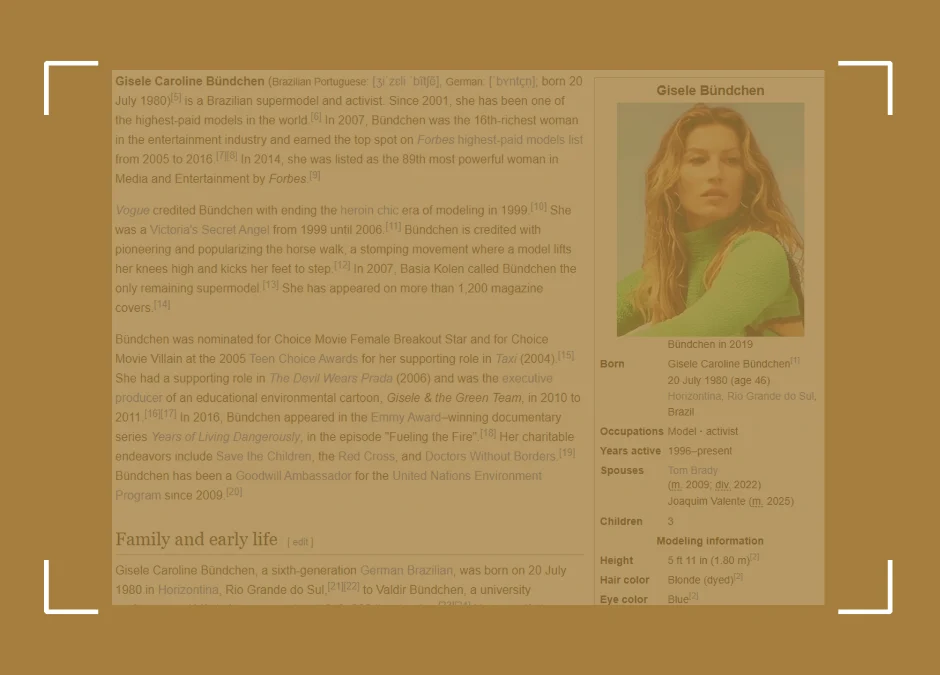
Biographies are the hardest articles on Wikipedia to land, and the easiest to lose.
Wikipedia holds articles about living people to a stricter standard than anything else on the site. The policy is called Biographies of Living Persons (BLP), and it exists because a bad Wikipedia article about a company is a nuisance while a bad one about a person is a lawsuit. Reviewers know this. They read biography drafts with a different level of suspicion, and they delete borderline ones faster.
So if you’re trying to create a page for a person, whether that’s your client, your boss, your parent, or someone whose work you admire, the process has extra rules the general tutorials don’t mention. Here they are.
Does the Person Qualify for a Wikipedia Page?
When does a person qualify for a Wikipedia page?
A person qualifies when they’ve received significant coverage in multiple reliable, independent sources, or when they meet a category-specific test such as Wikipedia’s criteria for academics, athletes, musicians, or politicians. Fame, wealth, and professional success don’t count by themselves; documented coverage does.
That last sentence eliminates most candidates, so let’s be precise about it.
Wikipedia has a general test and a set of shortcuts. The general test (WP:GNG) asks whether journalists and authors who don’t know the person have written about them in depth. Two or three substantial profiles in real publications and the answer is probably yes.
The shortcuts (WP:NBIO and its sub-criteria) give certain careers their own doors in. A tenured professor with a named chair or highly cited research can pass WP:NPROF without a single newspaper profile. An athlete who has competed at the highest professional level, a musician with charted records, a politician who has held statewide office: each has a defined threshold. If your person fits one of those categories, check the specific criteria before assessing general coverage. Our guide on what makes someone notable for Wikipedia walks through the categories in detail.
Two traps to avoid at this stage.
Inherited notability doesn’t exist. Being the CEO of a notable company, married to a celebrity, or the child of a famous person confers nothing. The person themselves must have coverage about them. We see this most with executives, which is why we wrote a separate piece on Wikipedia pages for CEOs.
One event isn’t enough. Someone covered heavily for a single news moment (a viral incident, one lawsuit, one award) usually fails Wikipedia’s BLP1E rule, which says people known for one event get an article about the event, not a biography.
If the coverage isn’t there yet, the fix isn’t a cleverer draft. It’s earning coverage, which is a PR project, not a Wikipedia project. Here’s how that’s done when it’s done deliberately.
Writing About Someone You Know: The COI Question
Be honest about why you’re doing this, because Wikipedia will ask.
If the person is your client, employer, relative, or friend, you have a conflict of interest. If you’re being paid, in money or in salary, you’re a paid editor, and disclosure isn’t a courtesy, it’s a Terms of Use requirement. You declare the relationship on your user page before submitting, and the draft goes through Articles for Creation review rather than direct publication.
A disclosed COI is a manageable handicap. Reviewers evaluate the draft on sourcing and neutrality, knowing your relationship. An undisclosed COI that gets discovered later (and the editors who investigate this are relentless) taints everything: the article gets tagged or deleted, your account gets blocked, and the person’s name becomes associated with a manipulation attempt in a public log that never goes away.
Total strangers writing about a subject have no COI and none of these obligations. If you found the person through their work and have no connection, you can just write, though the sourcing and BLP standards below still apply in full.
The BLP Sourcing Standard Is Different
For most articles, a weak source earns a “citation needed” tag. In a biography of a living person, unsourced or poorly sourced contentious material doesn’t get tagged. It gets removed immediately, by policy, and repeat problems get the whole article deleted.
What this means for your draft:
Every biographical fact needs an inline citation. Birth date, education, career moves, awards. If a fact appears in no independent source, it probably shouldn’t appear in the article, even if the person told you directly. Wikipedia calls that original research and BLP articles are the worst place for it.
Self-published sources are nearly useless. The person’s LinkedIn, personal site, and interviews can support only bland, uncontroversial details, and sparingly. They can never support anything self-serving or disputed.
Negative material can’t be hidden, and shouldn’t be volunteered carelessly either. If reliable sources covered a controversy, a neutral article reflects it in proportion to the coverage. A draft that omits well-known negative press reads as promotional and gets declined. One that dwells on it violates BLP’s proportionality rules. The standard is: what the sources emphasize, the article emphasizes.
Privacy beats completeness. Birth dates, family members’ names, home locations: BLP policy says leave them out unless widely published by reliable sources. Including a detail the person shared privately is a policy violation even if it’s accurate.
The Process, Start to Finish
The mechanics follow the same path as any article. The biography-specific sequence:
- Check notability against the person’s category (NPROF, NMUSIC, NPOL, NATHLETE, or general GNG). Be pessimistic on purpose.
- Build the source file: every independent article about the person, ranked by depth. Two or three load-bearing profiles minimum.
- Disclose any COI on your user page.
- Draft neutrally. Lead sentence: who they are and what they’re known for. Body: chronological career built strictly from the sources. No résumé language. “An award-winning visionary leader” is a decline; “received the 2024 James Beard Award” with a citation is an encyclopedia entry.
- Submit through AfC and wait out the review queue without fidgeting with the draft daily.
- After approval, watchlist the page. Biographies attract edits, and the person should know that the page will now reflect whatever reliable sources publish about them next, good or bad. That’s the deal. Anyone not comfortable with that deal should think hard before pursuing a page, because removing a page later is far harder than most people assume.
The Mistake That Sinks Most Biography Drafts
After sourcing, it’s tone, and biography tone failures have a specific flavor: the draft reads like the subject’s speaker bio.
Speaker bios select achievements, order them for impact, and describe them in the subject’s preferred framing. Encyclopedias report what independent observers considered worth recording, in neutral language, with the boring parts left in. The difference is obvious to a reviewer within two sentences.
The practical fix is mechanical. Take every sentence in your draft and ask: which cited source says this? If the answer is “none, but it’s true,” cut it. If the answer is “the subject’s own website,” cut it or find a real source. What survives this filter is usually shorter, plainer, and approvable.
FAQ
Q: Can I create a Wikipedia page for someone else without their permission?
Yes. Wikipedia doesn’t require the subject’s consent, and notable people get articles they never asked for every day. But if you’re connected to the person, disclosure rules apply, and if the person objects and they’re borderline-notable, Wikipedia sometimes honors deletion requests from the subject.
Q: How much coverage does a person need before qualifying?
As a working rule: two to three in-depth, independent profiles in reliable publications, or a clean pass of a category test like NPROF or NPOL. Ten passing mentions don’t add up to one profile. Depth beats volume every time.
Q: Can I write a Wikipedia page about a family member?
You can, with a disclosed conflict of interest and AfC review. Expect the draft to be judged more skeptically. Genealogy-style detail (family names, private dates) will be stripped under BLP privacy rules regardless of accuracy.
Q: What if the person has negative press?
If reliable sources covered it, the article will reflect it in proportion, and attempting to omit it will get the draft declined as non-neutral. A page is only a good idea when the overall sourced record is one the person can live with permanently.
Q: The person is famous in my country but has no English coverage. Does that work?
Non-English sources are fully acceptable on English Wikipedia if they’re reliable and independent. Cite them in the original language with translations of key titles. Reviewers judge the quality of the publication; the language barely registers.
A biography that gets approved is one where the sources did the bragging years before the draft was written. If the coverage exists, the page is largely paperwork. If it doesn’t, no draft can conjure it. Reputn’s free notability assessment will tell you which situation you’re in, and we’ll be blunt about it, because a rejected biography draft is a public record nobody needs.